 WOOL
WOOL 

WOOL 2025
MURALS
Boa MisturaES
Stelios PupetGR
Lidia CaoES
Lígia FernandesPT
INSTALLATIONS
AmpparitoES
ARTISTIC RESIDENCIES - MUSIC
SurmaPT
Bia MariaPT & Coro ViésPT
REAL-TIME DRAWING SHOW
“Desenhos Efémeros” by António Jorge GonçalvesPT
EXHIBITIONS
WOOL @ Museu da Covilhã _ permanent exhibition
“Boas e Más Ideias” by Hugo MakarovPT
MASTERCLASS
“Boas e Más Maneiras” guided by Hugo MakarovPT
“Desenhos Efémeros: o desenho como performance” guided by António Jorge GonçalvesPT
FILM
“Crossroads – el viaje circular de Boa mistura”ES _ documentary premiere
“Grand Tour” by Miguel GomesPT
MUSIC
Vasco Fazendeiro & João SemedoPT
Má-horaPT
LX30PT
CISMA Studios DJsPT
COMMUNITY ART INICIATIVE
“Todos Somos o Outro” by A Avó Veio TrabalharPT
TALK
Portugal ManualPT podcast _ recording WOOL 2025 season (10 episodes)
WOOL TALKS | Urban Art International Conference
WOOL STREET
WORKSHOPS – Street Artists by Valice Atelier, Experimental Tiles by Marta Amaro, Cyanotype by Luana Lobato, Punch Needle by Oficina da Rita, Rodilhas por Adufeiras da Casa do Povo do Paul and Tattoo by Coé Tattoo
MUSIC – Bia Maria & Coro Viés, “Contos e Lenga Lendas” by Gil Dionísio, Fanfarra 4XX, Jam Session by CISMA, Tear Sonoro and CISMA Studios DJs
TALK – Portugal Manual _ recording WOOL 2025 season, epis. 9
MASTERCLASS – “Boas e Más Ideias” by Hugo Makarov
ARTISTIC INTERVENTIONS – ‘Desenhos Efémeros’ by António Jorge Gonçalves, ‘Cardápio Poético’ by Alice Neto de Sousa, ‘Todos Somos o Outro’ by A Avó Veio Trabalhar and ‘Memurial: efémero mural’ by Umbra
GAMES – Jogos do Helder e WOOL | wall by wall (app)
COLLABORATIVE MURAL – WOOL 2025
STREET STALLS
FOODS&DRINKS
COMMUNITY LUNCH
GUIDED TOURS
ARTWORK CREATED
19
WOOL returned to Covilhã in 2025 for the 12th edition of Portugal’s oldest urban art festival. Aiming to continue to set an example of decentralization, inclusion, social cohesion, and transformation of the territory and community through art, we once again presented an edition with a multidisciplinary program, intense creation, and occupation of public space.
The result could not have been more positive: thousands of visitors, new murals and art installations, more than 45 creative and cultural activities, the consolidation of RUA WOOL, and most importantly, the certainty that it is possible to build a more participatory and cohesive community through art and culture.
Over the course of nine days, it was possible to follow the performances of artists Boa Mistura (ES), Lidia Cao (ES), Stelios Pupet (GR), and Lígia Fernandes (PT), as well as installations by Ampparito (ES), which contributed to the already renowned WOOL Route, which is now undeniably part of the landscape and imagination of Covilhã.
The largest and most striking work for Covilhã and the history of WOOL is the wall by Boa Mistura, a collective recognized worldwide for its community building projects. A mural measuring over 450 square meters with the word “AMOR” repeated several times in different colors and shapes. According to the artists, the choice of word was not made at random, representing a need and urgency in view of the moment we are going through worldwide. It is an appeal to “love more” established in Covilhã, which can be seen from various points in the city and will be recognized far beyond borders as a global manifesto.
Portuguese artist Lígia Fernandes left three new murals in the city that respond to reflections on the loss of the street in the childhood life of Covilhã—where have the games of yesteryear gone? It is in this exploration that the artist leaves games such as “aí vai lenha” (there goes the firewood), “corrida com arcos” (race with hoops), and “escondidas” (hide and seek) on the mural. These murals can be found in the historic area of the city and, in the process of their creation, several people and hands came together to sign these walls alongside the artist.
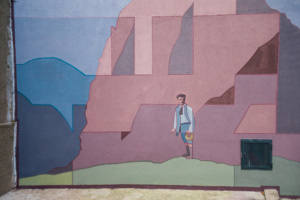
The WOOL Public Art Route also includes murals by Lidia Cao and Stelios Pupet, who, inspired by the work of local painter Eduardo Malta and the female figure, focus on different themes: the persistence and resistance of women and care and devotion to nature.
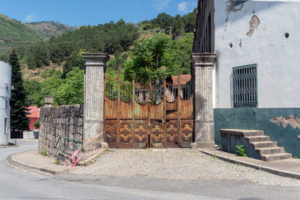
In addition to the murals, Spanish duo Ampparito created two more conceptual art installations that are currently on display in the streets of Covilhã. The first, “Naranjo para calle,” is a caged orange tree that prompts reflection on the need to put bars, locks, and padlocks on objects we value when we place them on the street. The second is a gate from an old factory in Covilhã that was restored by this pair of artists. In the project entitled “Verde memoria,” the gate is covered in six different shades of green, a variety that comes from various accounts by former factory employees about the original colour of the gate. It thus becomes a tribute to memory and how it can be personalized.
But, as expected, we didn’t stop there! We presented a lot of music, training and masterclasses, technology, workshops, community and participatory activities, leisure and knowledge, new activities and the consecration of old ones. And with all this, we strengthened the community ties that are both the motto and the result of the festival, confirming that this is the path to our ambitions.
At the start of the 12th edition of WOOL, we inaugurated a permanent exhibition in a room at the Covilhã Museum dedicated to the entire journey we have taken over the last 14 years. In this room, using text, video, images, a table with a tactile replica, and accessibility resources, there is a sample of what we are as an urban art festival, as agents of a community, and as citizens who are passionate about the city.
As for the musical program, the mini-concerts were once again the most popular events among the local population and visitors. Special mention goes to the debut of the Má-Hora project, which went from playing in his bedroom to a staircase with more than 120 people. This mini-concert was one of three curated by CISMA, a three-year partnership with the festival. The other two mini-concerts were performed by Vasco Fazendeiro & João Semedo and the LX30 project.
Surma and Bia Maria also performed to packed and attentive audiences. Surma presented the results of a sound and visual residency that captured characteristic sounds and images of Covilhã and the surrounding region. Bia Maria took to the stage with her latest album, Qualquer Um Pode Cantar (Anyone Can Sing), and the result of her collaboration with Coro Viés – Vozes em Intervenção (Voices in Intervention), an all-female choir recently created by the social intervention cooperative Coolabora. This show took place in front of a completely packed Santa Maria Church, on a date when the artists took to the stage dressed in the colors of Palestine in solidarity with the events of massive destruction in Gaza.
Moving away from music, there was still time for the real-time drawing show “Desenhos Efémeros” (Ephemeral Drawings) by António Jorge Gonçalves, in front of a crowded public street in the historic center, with eyes fixed on the wall being painted live. The day before, the premiere of the film “CROSSROADS – el viaje circular de Boa Mistura”, a documentary that follows the best works and their relationship with local populations carried out by the Spanish collective Boa Mistura around the world. In both cases, WOOL once again became a stage for social and political concerns, in a clear desire to respond to current social anxieties and concerns.
WOOL TALKS returned in 2025 with a shorter program, but one that was no less relevant. On the afternoon of June 27, two international panels reflected on creation in public spaces, democracy, and accessibility, topics that are relevant and urgent to debate in our country’s current scenario. This edition of the festival also included a training session with Maria Vlachou on the theme “The mission of cultural organizations.”
As thought and knowledge take up no space, this year there was an opportunity to learn more about the history of urban art, the history of WOOL, and the history of Covilhã during a quiz night. Curiosity, fun, and healthy competition came together at the Oriental de São Martinho bar, resulting in an unforgettable evening of friendship and culture.
In the extensive and diverse program of the 12th edition of WOOL, there was also time and space for two masterclasses: “Good and Bad Ideas,” led by Hugo Makarov and accompanying the artist’s exhibition during the festival, and “Ephemeral Drawings: drawing as performance,” by António Jorge Gonçalves.
WOOL was also the setting and home for the recording of 10 episodes of the WOOL 2025 season of the Portugal Manual podcast. One of the episodes was recorded live and took place during RUA WOOL, which once again took over the streets of Covilhã’s Historic Center with endless activities of various formats and artistic disciplines: installations, workshops, concerts, a participatory mural, traditional games, and much more! RUA WOOL was the place where young and old, residents and visitors, with and without disabilities, of all colors and sizes, national and international, met, participated, and learned side by side. It was the place where we could once again experience the past and the present, tradition and modernity, and different sounds simultaneously. It was beautiful to relive memories and build new ones for the future, among many children and adults, with those from here and those who came from many other places.
If WOOL 2025 aimed to encourage participation across its entire programme, it began and ended with a special project. Conceived by A Avó Veio Trabalhar project (“Grandma Came to Work”), the community art initiative ‘Todos Somos o Outro’ (We Are All the Other), which took place between April and June, involved more than 500 people aged between 6 and 100, from numerous locations such as Sobral de São Miguel and Casegas in Covilhã, but also from Manteigas, Fundão, Lisbon, Oeiras, Cascais and Seixal. All of them voluntarily produced 600 small squares of Smyrna wool, which were joined together on the last day of WOOL to form a single, beautiful carpet, full of diversity and identity. This action could only have ended with another moment of equal sharing and communion: a community lunch, which attracted more than a hundred people to the Covilhã Public Garden, who were able to share a meal as if they were sharing their lives. In fact, that’s what it’s all about, isn’t it?






Partners




Patron

Institutional support
Sponsor

Official hotel

Official viature

Logistic partners












Programming partners


Media partners













Graphic project
